SMR12 series
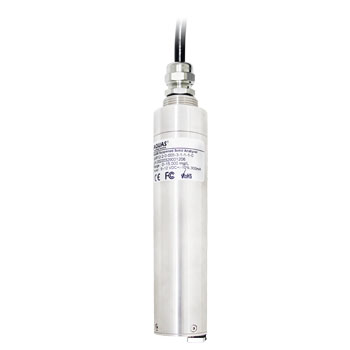
Suspended Solids Analyzer
The suspended solids Analyzer is a sophisticated sensor that uses a built-in LED light source to emit a beam of 880nm. After the beam is scattered by suspended solids in the sample, the signal intensity is measured by the detector to measure the suspended solids concentration of the sample. Since the LED emits 880nm near-infrared, it will not be affected by the color of the water sample. It is unique in that it can measure low to high concentrations of suspended solids. Ideal for wastewater, drinking water monitoring, mixed liquor suspended solids monitoring, and many more applications that require the use of traditional turbidimeters or suspended solids analyzers. Suspended solids sensors can be equipped with a self-cleaning feature that sprays water or air onto the optical windows to keep them clean and extend sensor maintenance intervals.
Features
- All-in-One Compact Housing, Built-in Transmitter and Sensors
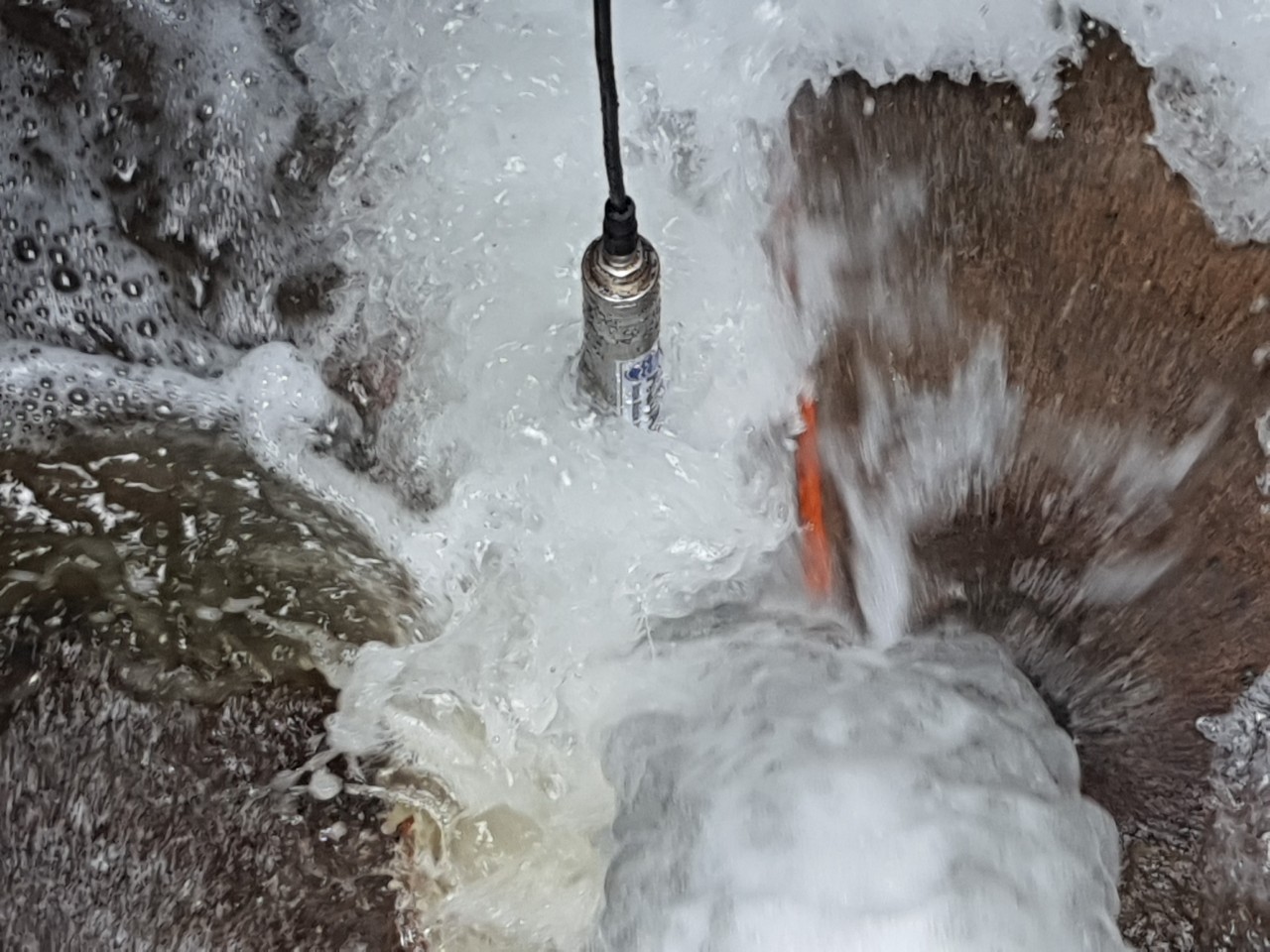
- Robust IP68 Water Submersible Protection, Directly Installed in the Field, No Cabinet Required
- Ultra Low Power Consumption, Ideal for Outdoor Applications
- 1000 N Tensile Strength Kevlar Reinforced Cable
- Built-in Temperature and Humidity Monitoring Function
- Advanced Intelligent Algorithm and Signal Processing Technology to Eliminate Noise
- Surge Protection for Power and RS485 Communication
- RS485 Digital Communication, Minimize Cabling and Engineering Cost
- Standard Modbus RTU Protocol, Direct Connected with PLC, HMI
- Sapphire Glass Windows to Prevent Scratch
- Innovative Nano Coating to Remain Window Clean
- Auto Cleaning Wiper, Minimal Maintenance
- Onboard Memory Allowing Users Easily Calibrate and Configure Sensor at Lab and Distribute to Various Fields Sites
- Software Tool for Data Monitoring, Calibration , Configuration and Diagnosis
- IECEx/ATEX Ex ia IIB T5 Ga Explosive Proof Certification
Applications
Drinking water, surface water, industry, water treatment, wastewater
Models
![]() |
Technical Comparison
SMR12 Total Suspended Solids TSS and Mixed Liquor Suspended Solids MLSS Analyzer Technical Comparison
| Comparison Item | SMR12 TSS/MLSS Analyzer | Traditional Sampling / Laboratory Analysis | General Handheld TSS / Turbidity Meter | General Suspended Solids Sensor / RTU Integration |
|---|---|---|---|---|
| Product Positioning | Online Total Suspended Solids (TSS) and Mixed Liquor Suspended Solids (MLSS) analyzer, supporting RS485 Modbus RTU and optional 4–20 mA output | Periodic manual sampling followed by laboratory analysis | Short-term on-site measurement using a portable instrument carried by personnel | Requires additional integration of sensors, control cabinet, RTU/PLC, and communication equipment |
| Measurement Principle | Uses an 880 nm near-infrared LED light source to detect scattered signals from suspended particles and calculate suspended solids concentration | Measured according to laboratory methods, with results obtained later | Depends on instrument design and operator method, usually used for on-site spot checks | Depends on sensor specifications and usually requires additional on-site data acquisition equipment |
| Real-Time Capability | Supports continuous online monitoring with a response time of 3 seconds | Requires sampling, preservation, transportation, and analysis, and cannot reflect on-site changes in real time | Requires personnel to perform on-site measurement and is not suitable for long-term unmanned monitoring | Depends on the data logger and communication integration status |
| Installation Method | Immersion, flow-through, and pipe-insertion installation; IP68 submersible enclosure for direct on-site installation | No fixed equipment is required, but manual sampling points and sampling procedures are needed | Requires personnel to operate on site and is not suitable for long-term fixed monitoring | Usually requires a control cabinet, wiring, and engineering integration |
| Maintenance Requirements | Sapphire glass optical window, nano-coating, and automatic cleaning brush help reduce sludge, biofouling, and bubble interference | Requires continuous arrangement of sampling, preservation, and testing procedures | Requires regular calibration, cleaning, and manual operation | Requires maintenance of the sensor, RTU, power supply, and communication equipment at the same time |
| Data and Communication | RS485 digital communication with standard Modbus RTU, allowing direct connection to PLC/HMI; transmission distance can reach up to 1.2 km | Data must be manually recorded or output from the laboratory system | Usually requires manual transcription or manual data export | Communication functions depend on the integration solution |
| Environmental Resistance | IP68 anti-corrosion enclosure, 1000N Kevlar cable, and surge isolation protection | Sample analysis is not limited by on-site installation environments, but real-time monitoring is not available | Personnel and instruments are limited by on-site weather, environment, and safety conditions | Depends on the control cabinet and installation design |
| Data Reliability | Built-in temperature and humidity self-status monitoring, abnormal diagnostics, and calibration parameter storage | Laboratory data is reliable, but the time resolution is low | Affected by the operator, sampling point, and sample uniformity | Overall reliability depends on the quality of system integration |
| Suitable Applications | Drinking water, surface water, groundwater, industrial processes, water treatment, and wastewater | Regulatory testing and periodic water sample analysis | Inspection, preliminary judgment, and temporary measurement | Fixed sites with existing control systems |
Traditional sampling and laboratory analysis are suitable for formal testing, but they cannot capture on-site changes in suspended solids or sludge concentration in real time. Handheld TSS / turbidity meters are suitable for inspection and temporary measurement, but they are not suitable for long-term unmanned monitoring. With online continuous measurement, RS485 Modbus RTU communication, an IP68 submersible enclosure, an automatic cleaning brush, and optional 4–20 mA output, the SMR12 is suitable for long-term TSS / MLSS monitoring in drinking water, surface water, groundwater, industrial processes, water treatment, wastewater, and other applications.